
Raising a Child on the Margins in a World That Feels Unsafe
This morning, fear, tears, and anger once again filled our household. We are reeling from the executive order about birthright citizenship. This one is terrifying—it hits so close to home. It impacts so many families I love in Colorado and across the country. For so long, I’ve sat with news of atrocities and felt the ache in my heart. And then I moved on.
I moved on from Columbine, from 9/11, from the wars in Iraq and Afghanistan. I moved on from massive deportations and school shooting after school shooting. We’ve all moved on from so much—Hurricane Katrina, the Pulse nightclub shooting, Charlottesville, the ongoing climate crisis. My dear friend has cancer… again. How do we move forward from that? Another dear friend just lost his house in the LA fires. And my neighborhood high school just lost two students yesterday: one to murder and one to a murder-suicide. High schoolers.
2025 keeps on giving, getting messier and messier. Donald Trump’s response to Bishop Mariann Edgar Budde from the National Cathedral’s inaugural prayer breakfast—where she pleaded for mercy for immigrants and LGBTQ+ children—was to call her a “Radical Left hard line Trump hater” who is “not very good at her job.” He demanded an apology. Her sermon asked Trump “to have mercy upon the people in our country who are scared now.” Trump glared uncomfortably as she spoke about gay, lesbian, and transgender children fearing for their lives and immigrants worrying about being deported. Budde later responded: “I am not going to apologize for asking for mercy for others.”
This response—dismissing a plea for compassion as “boring” or unworthy—cuts to the heart of the problem. And now, the federal government will no longer cover gender-affirming care. Do we know what this means? Do we understand the hell of not being able to be yourself? It’s a hell I’ve lived most of my life. Trying to be what this world has told me to be—a white, upper-class, heterosexual, cisgender male. Growing up, I was constantly shown and told, in the voices that dominated my world—the voices of white, upper-class, heterosexual males—that they were the ones who belonged, who were the best, who mattered most. It’s confusing and isolating when you are not that, yet the majority of stories, histories, and news all share that same perspective. I wanted to be a white male in status because that is where I would be heard, respected, and accepted. But in my heart, I’m all woman—who happens to like dressing in blues, jeans, and pockets. That truth, though, felt impossible to reconcile with the world’s expectations of me. I gave it my best, and it killed my spirit. It nearly killed me in suicidal depression. The pain of forcing myself into a heterosexual box left me feeling unlovable and unattractive. I’ve lived through two failed marriages, judged myself, felt the shame and moral corruption of it all. I’ve wrestled with trying to reconcile being attractive to men—to belong, to feel loved—with what feels authentic in my heart. A more masculine appearance.
I don’t experience body dysmorphia. I can skate by, pushing the system and saying I’m wearing “men’s” clothes. But what if it’s my body that doesn’t fit? What if my breasts feel as allergic to me as high heels? What then?
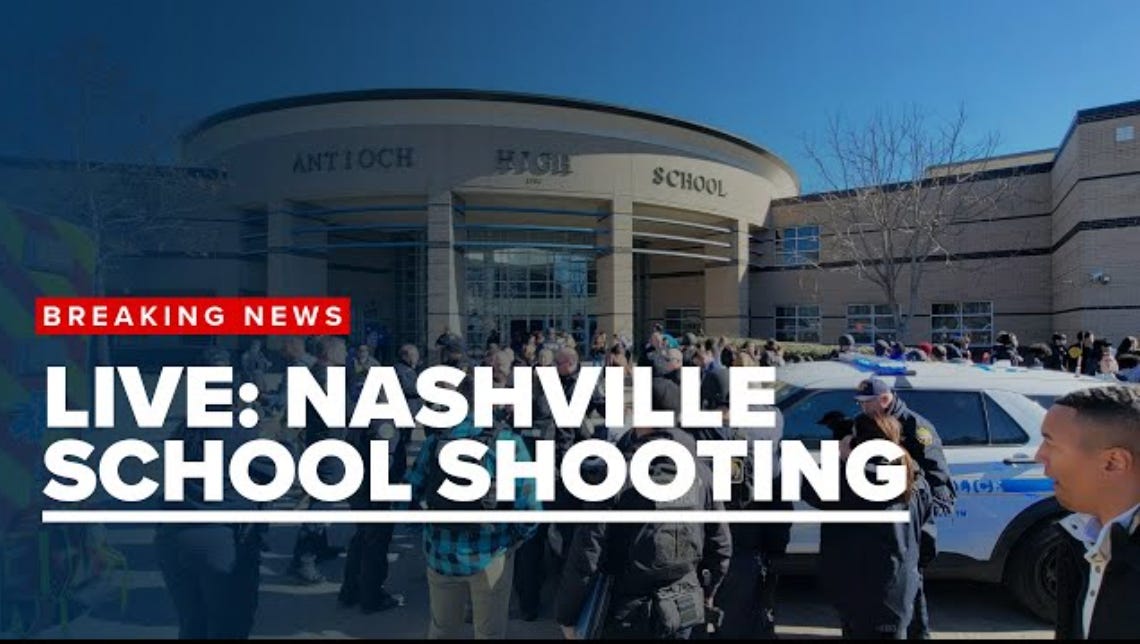
This morning, we are navigating how to tell our queer, nonbinary, mixed-race, adopted, neurodivergent (can we be more on the margins) kid that there was a school shooting in Nashville where two people died. How do we tell them that measures like locks on the doors and lockdown drills don’t really matter when a student can still bring a gun to school and kill other students? There are zero protections for this at my kid’s school. There is no gun control. In fact, under Tennessee law, teachers are allowed to carry concealed firearms in schools after receiving training and approval.
The 2024 session of the Tennessee legislature saw bills expanding gun access instead of restricting it, even after the tragic Covenant School shooting in March 2023 where three students and three staff members were killed. Republican lawmakers pushed through measures like allowing teachers to carry firearms, arguing it would deter shooters. But experts and many in the community disagree. High school students have protested, demanding meaningful gun reform, but their voices seem to fall on deaf ears. Instead, more bills to loosen gun restrictions, like permitting long guns to be carried openly, are likely to be considered in 2025.
I’m not safe in Tennessee. I’m not safe in the U.S. My gender expression, my gender, my sexuality do not align with those in power. Through tears, we told our kid that we need to talk about it, to share our feelings. They didn’t want to talk. And I get it. Most of us don’t. We want to move on to school, to work, to our lives, and live in the delusion that “it will never happen here.” But less and less of us are okay.
I suggested that our kid write a paragraph to explore their feelings. They’re in fifth grade, learning to express their beliefs, opinions, and views. Immediately, their dad—my wife’s ex—shot the idea down. “Oh no, we are NOT doing that right now.” Why? Because it’s hard? Because it’s uncomfortable? This is what we need. Does anyone in the world’s paragraph matter more than a Black, Mexican, queer, neurodivergent kid’s? We need their paragraph more than ever. Their voice matters.
Do we read Hitler’s biography or rhetoric? No. We read the paragraphs of fifth graders—Anne Frank was 13 years old when she began writing in her diary. What if Anne Frank had been told writing a paragraph wasn’t the thing to do in the midst of war, repression, violence? This is what moves the needle—real-life stories from those we are oppressing. From those being deported, jailed, cut off from benefits and healthcare. From those kicked out of churches, families, and communities. These voices matter.
This mess, this realness, is where connection lives. This is what connects us. We need the stories. This is what I am committed to: telling my story of depression, suicidal ideation, gender failure, questioning sexuality, coming out, grief, rape, trauma. And holding space for others to do the same.
To my kid: I love you. I see you. I hear you. Your voice matters. I have a dream that you live in a world where you are valued, seen, heard, respected, and wanted. A world where your Black, Mexican, queer, neurodivergent identity is celebrated, not just tolerated. I dream of a future where you feel safe to be yourself, to speak your truth, and to live boldly and unapologetically.
I will give my heart and soul to making that dream a reality for you. I will fight for your voice to be heard, for your story to be told, and for the world to embrace the beauty and brilliance you bring. I refuse to stand by while fear and silence try to take over. I will not numb myself to the pain of injustice or the weight of these times. I will stand in the mess, in the chaos, and in the truth—because you, my dear child, deserve nothing less.
This is my promise to you: I will never stop fighting for a world where you can thrive. I will never stop believing in your light, your power, and your potential. And I will never stop telling you that you matter, your voice matters, and your dreams matter. Always
.


