
🧨 Bare Minimum Boys, Broken Systems, and the Rage That Heals
A review of “Graphic Rage” — and the stories it woke in me.
“Why didn’t you say you were in this much pain?”
“I did.”
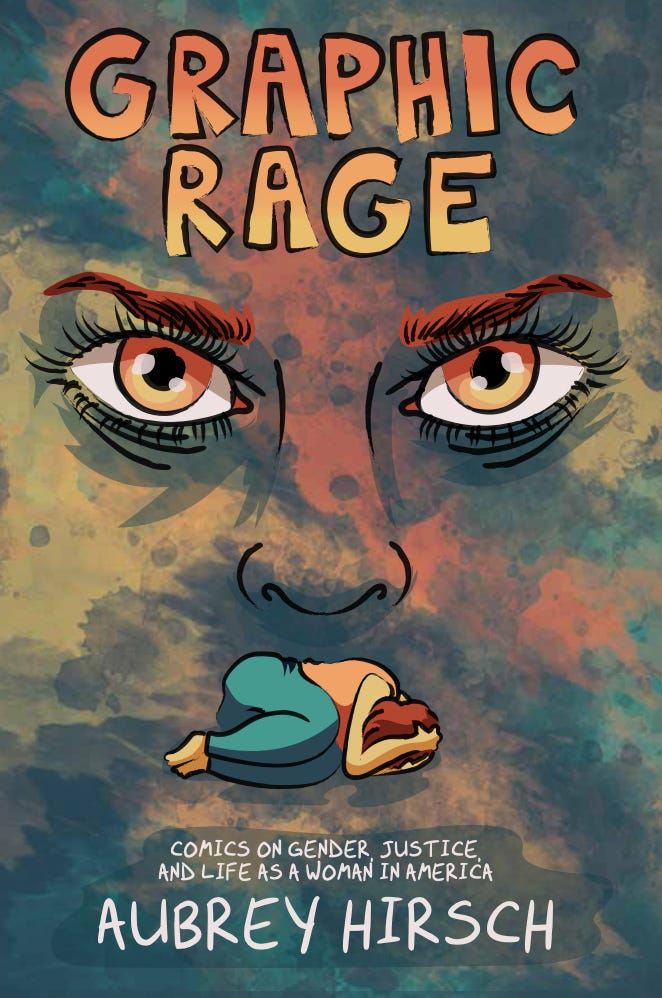
Reading Graphic Rage, Aubrey Hirsch’s new collection of comics on gender, justice, and life as a woman in America, cracked something open in me.
No, that’s not quite right.
It revealed what was already cracked.
It peeled back the skin on what so many of us have been carrying for years — silently, obediently, out of fear, out of shame, out of trying to be “good.”
This book doesn’t flinch.
It doesn’t apologize.
It draws what happens when women are expected to be all things to all people — and how we are so often met with dismissal, danger, and silence in return.
The first comic that hit like a freight train: a man smiling beneath a party banner that says,
“YOU DID THE BARE MINIMUM!”
It’s funny. But it’s also absolutely enraging — because I’ve lived it.
In relationships where men were emotionally unavailable, joyless, dishonest — and I was still told how lucky I was.
I tolerated:
-
Being lied to about taxes.
-
Being left alone on a paddleboard in the middle of a lake.
-
Partners who wouldn’t engage with my family, show up for my life, or take care of themselves.
And I still felt grateful for their attention.
I was taught to be. We all were.
One of the most powerful graphics in the book is a flowchart titled “How to Report Your Rape.”
It’s not just a comic — it’s a map of institutional betrayal.
All the steps. All the judgment. All the hoops.
It’s overwhelming — and terrifyingly accurate.
I was raped at 19 at a fraternity party.
I was taken to the ER. Alone.
A college administrator showed up — in the middle of the night — and cracked jokes while I sat in a hospital gown, exposed and humiliated.
They wanted to do a rape kit. I had never even had a pelvic exam. I was scared.
No one explained what was happening. I said no.
And the administrator, quick to protect the school, said:
“Great. We’ll just clean up the scratches and go.”
I left the hospital traumatized — and didn’t speak of it again for 20 years.
Years later, I was bleeding heavily — exhausted, in pain, unable to function.
My male OB-GYN brushed me off:
“Heavy periods? That’s it?”
He attempted to insert an IUD — couldn’t — and I sobbed on the table.
It was excruciating. He said nothing.
It wasn’t until later that a polyp was discovered — the cause of the bleeding all along.
As I left the office, they told me:
“If you bleed through more than one pad an hour, that’s an emergency.”
I’d been doing that for months.
“Oh… well, call if it gets worse.”
Worse than your emergency guideline?
I was already there.
There’s a thread that runs through Graphic Rage — sometimes explicit, sometimes simmering just below the surface:
Why is the cultural standard that every man deserves a wife?
Wives are therapists, schedulers, cleaners, peacekeepers, homemakers, forgivers.
And men get congratulated for… being there?
The best thing that ever happened to me was falling in love with a woman.
To be seen, held, met — emotionally, intellectually, spiritually.
To not have to justify my exhaustion.
To not have to explain my rage.
Aubrey Hirsch’s work here isn’t entertainment — it’s truth-telling in panels.
It’s memory. It’s testimony. It’s protest.
And more than anything, it’s art doing what art is supposed to do:
✨ It heals.
✨ It forces change.
✨ It says: You’re not crazy. You’re not alone. And you’re not the problem.
✨ It reminds us that our stories, our voices, our art — they matter.
This is how we change things.
By naming what we were told not to name.
By making visible what was hidden.
By raging out loud, together.
Graphic Rage is available now for preorder from Split/Lip Press. It’s not out yet — but let’s make sure it gets into as many hands as possible.
Preorder it.
Tell your local indie bookstore to stock it.
Gift it.
Talk about it.
Add it to your feminist cannon — right between Roxane Gay and bell hooks.
🛒 I’ll also be adding it to my curated Bookshop.org list soon.
Have you lived something that’s in this book?
Were you ever told your pain wasn’t real?
Have you said “I did say I was in pain” — and been met with silence?
Comment below. Share your story. Rage with me.
Let’s stop whispering and start naming.
Let’s stop protecting the people who hurt us.
Let’s draw a new banner — not “You did the bare minimum.”
But “We are done settling.”
With love and fire,
Molly


