
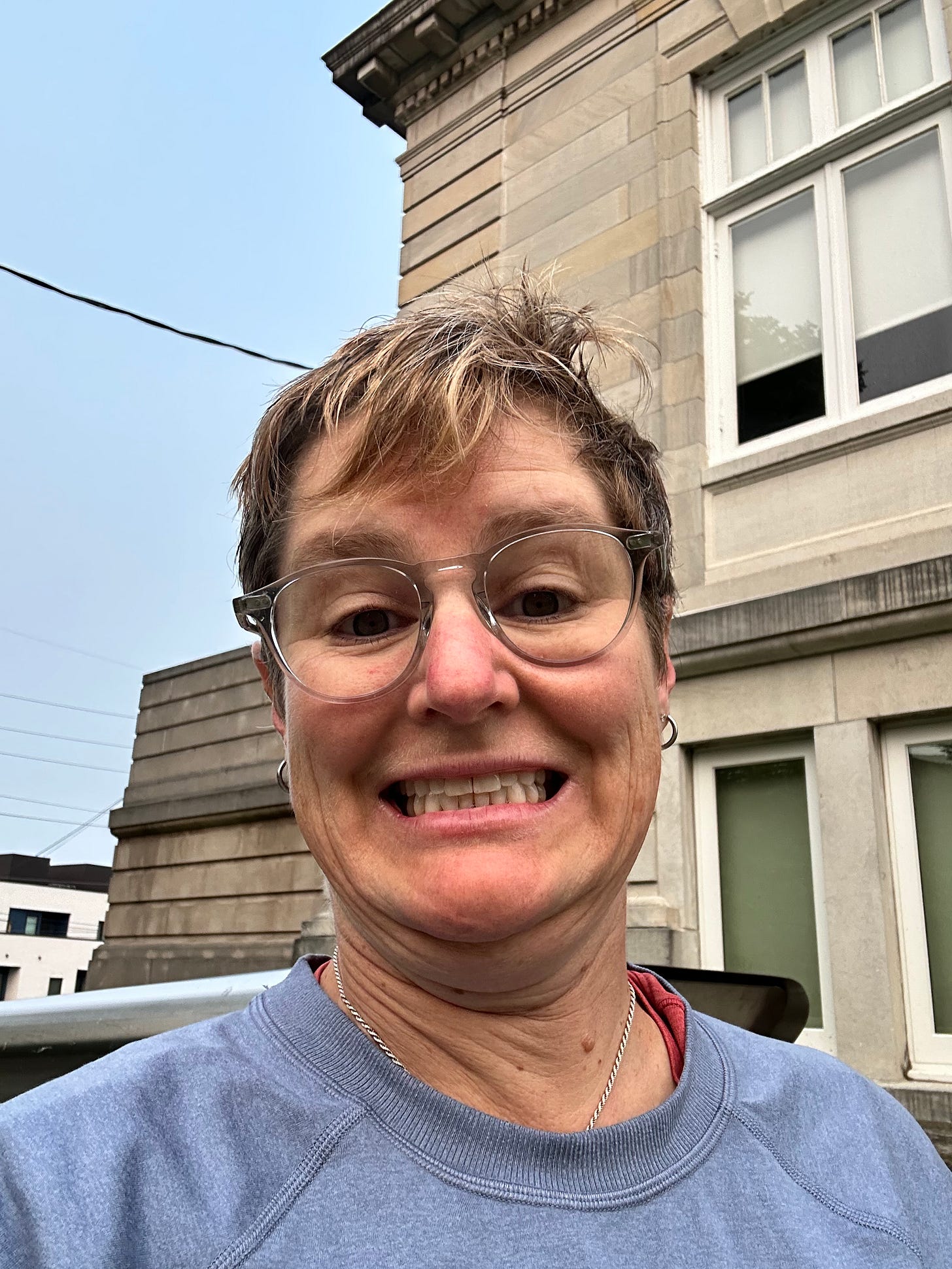
Starting Over at Midlife – by Molly Booker
Starting Over at Midlife
You’re not late. You’re right on time.
There’s this tricky terrain I keep bumping up against: how do we tell the truth about what hurt us without turning our healing into harm?
I came out at 47, and in doing so, I cracked open an entire identity I hadn’t fully accessed before. I didn’t just come out as queer. I came out as me. But with that self-discovery came an avalanche of reflection—memories, misunderstandings, stories I had long buried to keep the peace or simply because I didn’t know they were mine to examine.
And suddenly, I had language for things I never did before. I could name why certain rooms made me shrink. I could see how my silence had been a survival strategy. I could trace my longing back to moments that felt small at the time but left deep marks. And in those awakenings, I did what I’ve always done: I wrote.
I wrote to survive, to understand, to heal.
But lately, I’ve been reflecting on the ripples of that writing. When I write about my childhood or my relationships or the unhealed places in my family, I’m not writing to assign blame. I’m writing to reclaim parts of myself. To locate the child I was and love her better this time.
Still, I know my truth is not a vacuum. It touches others—especially the people I love.
So how do I move forward as a writer, a seeker, a midlife beginner—without making anyone the villain in my healing story?
Here’s what I’m learning:
1. Healing and blame are not the same.
I can honor the pain I experienced without needing to name someone as “wrong.” My parents were doing the best they could with what they had. So was I. That doesn’t make everything okay. But it does soften the lens.
2. Repair is a sacred practice.
I’ve gone back and reread things I’ve written about my dad and felt a tug of regret—not because the truth wasn’t real for me, but because I can now see how it might have landed. If I could go back, I’d write with more care, not less truth. There’s a way to say this hurt without saying you hurt me on purpose.
3. Privacy matters, even in public healing.
Some stories are mine to tell. Others are shared terrain. I’m learning to ask: Is this story mine? Do I need to name the person to share the lesson? Can I honor what happened without disclosing more than necessary?
4. Love is not incompatible with growth.
I want to love my parents for who they are and heal from what wasn’t available when I needed it. I want to honor the sacred teachers I’ve had, the friends who held me, and even those I’ve had to step away from, without turning them into cautionary tales.
This is what sacred reinvention looks like. It’s not tidy. It’s not about declaring yourself healed and done. It’s about coming back to the people who shaped you, with a fuller version of yourself, and choosing to move forward with kindness, clarity, and boundaries.

There’s been a lot of mess in my life.
And truthfully, I’ve created a lot of that mess.
But here’s the thing I need you to know:
I fucking love who I am today.
Every confusing moment, every rupture, every ache, every single part of the road we’ve traveled—it all shaped the person I see in the mirror. And I love the shit out of her.
She is brilliant.
Kind.
Loving.
Brave.
Caring.
Generous.
Honest.
And none of that could have bloomed without the hard stuff. Without the lessons. Without the grief and the grit and the grace of growing.
So thank you.
Thank you for being my parents.
Thank you for walking through it with me—even when it was bumpy, uncomfortable, or messy as hell.
Thank you for hearing the hard shares. For staying.
I promise to keep growing in how I tell my truth—with care.
And I promise to move forward with more love, more tenderness, and more reverence for the people who helped build the heart of me.
To those of you reading this who are also starting over—whether coming out, healing old wounds, or finding your voice again—I want to remind you:
Your story matters.
And you get to choose how you tell it.
Not from blame.
Not from bitterness.
But from the bright, blooming truth of who you are becoming.
We are not too late to start again.
We are right on time.
With love and sacred respect,
Molly


