
Reframing Technology, Connection, and What Truly Matters
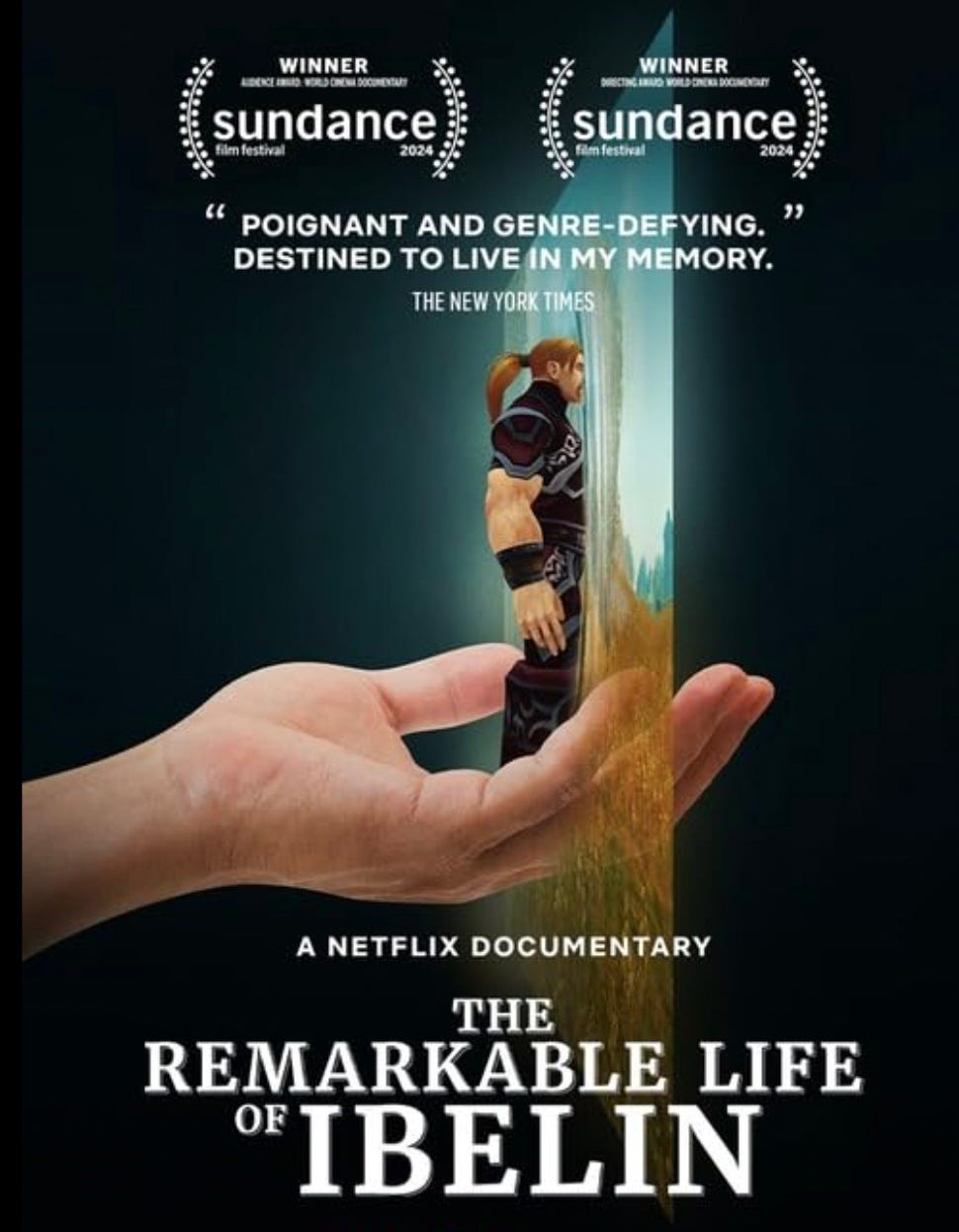
Lately, I’ve been reading The Coddling of the American Mind and The Anxious Generation, books that warn against screen time, especially for kids. I jumped wholeheartedly onto the “screen-time limits” bandwagon, cutting off YouTube, social media, and gaming, believing it was the best way to protect our family. But then, I watched The Remarkable Life of Ibelin, a documentary that made me question my hardline stance. This film tells the story of Mats Steen, a Norwegian gamer whose life—and death—shows how technology, especially gaming, can be a source of deep connection, belonging, and even transformation.
Mats Steen lived with Duchenne muscular dystrophy, a degenerative disease that severely limited his physical capabilities. But in the online world of World of Warcraft, Mats became “Ibelin”—a character with no physical constraints. Through his avatar, he spent tens of thousands of hours immersed in a realm where his physical challenges faded away, replaced by a sense of adventure, freedom, and connection. When Mats passed away at 25, his family assumed his disease had left him isolated. But as they soon discovered, Mats had formed an extensive, loving community online that deeply mourned his loss. His World of Warcraft friends, scattered across continents, shared stories of Mats’ kindness, humor, and unwavering support, revealing an entirely different side of his life than his family had known.
In one of the most moving stories, Mats connected with a fellow gamer who confided in him about her struggles with her autistic son. She was heartbroken that he wouldn’t leave his room, wouldn’t let her hug him, wouldn’t connect. Mats gently suggested that her son join him in the game. As they played together, the boy began to open up. Online, they shared moments that broke through barriers, moments that later translated into the real world. Through the game, the boy found a way to express himself and, even more miraculously, to hug his mother online, a gesture that eventually carried over into their everyday lives. Mats’ influence was profound, uplifting, and infectious, reminding us that digital spaces can foster connection, empathy, and transformation.
Watching this film made me realize that maybe it’s not about the screens themselves but about how we use them. Mats found purpose, friendship, and belonging in a digital world where he was seen for his character, his humor, and his strength, not his physical limitations. His story challenged my assumptions about screen time, especially for kids. It reminded me that technology, like a GPS, should serve us—taking us where we want to go, helping us connect, learn, and grow. If it starts steering us into meaningless distractions, we have the power to recalibrate.
Mats’ life was a powerful example of technology used intentionally to create connection, joy, and community. It wasn’t an escape; it was a bridge. What if we could use tech like this—to uplift, to heal, and to bring people closer? For me, platforms like Substack offer that potential too. I find myself craving longer-form, meaningful engagement, like Elizabeth Gilbert’s 10-minute videos, which foster depth and connection in a way quick sound bites can’t. Mats’ story reminds us that we can choose the way we interact with tech. It’s not all doom and distraction; it can be a conduit for purpose and transformation.
So here’s my question: How are we using technology to connect, grow, and be present? Watching The Remarkable Life of Ibelin opened my eyes to a new approach to screen time, one that can be harnessed for good, for community, and for true human connection. If this resonates with you, maybe take a step back and ask: What is technology doing for us? Is it helping us connect, belong, and grow, like Mats did? His legacy is a powerful reminder that sometimes the most unlikely tools can bring out the best in us.

